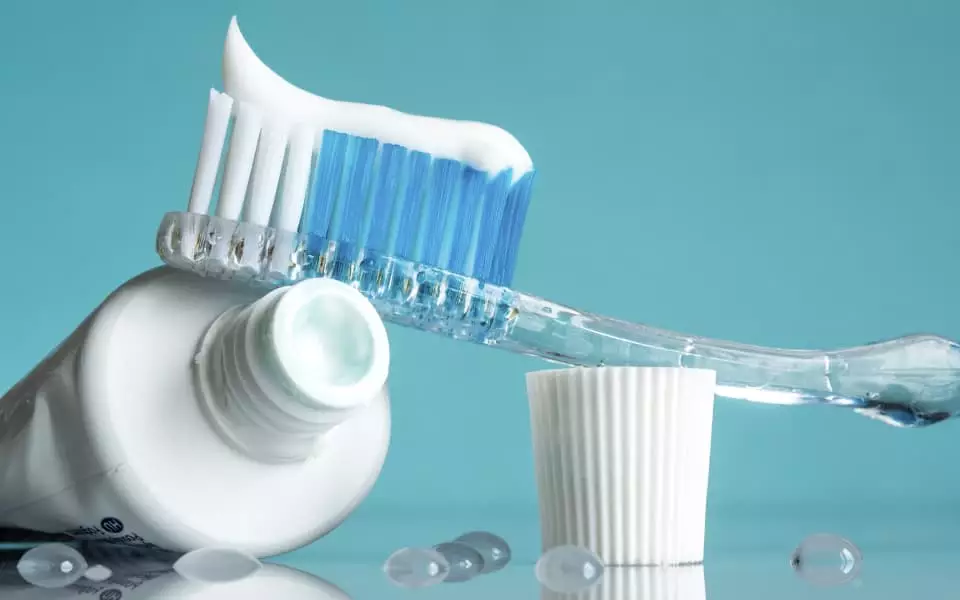
Most of us use toothpaste twice a day without giving much thought to what’s actually in it. But the ingredients in your toothpaste do matter. Some are genuinely beneficial, some are there mainly for texture or flavour, and a few are worth knowing about if you have specific concerns. Here’s a plain-English guide to what you’ll find in a typical tube.
Fluoride
Fluoride is the most important ingredient in toothpaste from a dental health perspective. It strengthens tooth enamel and makes teeth more resistant to the acids produced by bacteria in the mouth. It also helps to remineralise early-stage decay before it becomes a cavity. Most standard toothpastes contain between 1000 and 1450 ppm (parts per million) of fluoride. For adults and children over six, this concentration is both effective and safe when used as directed.
Some people remain wary of fluoride, but the evidence for its safety and effectiveness in these concentrations is very strong. There is no credible scientific evidence that fluoride at the levels found in toothpaste causes harm.
Abrasives
Toothpaste contains mild abrasives that help scrub away plaque, food particles, and surface staining. Common abrasives include hydrated silica (the most widely used), calcium carbonate, and dicalcium phosphate. The abrasiveness of toothpastes is measured using a scale called RDA (Relative Dentin Abrasivity). For everyday use, an RDA value below 100 is considered safe for most people. Whitening toothpastes tend to have higher RDA values, so using them every day, especially on already sensitive teeth, is something worth discussing with your dentist.
Humectants
Humectants keep toothpaste from drying out. The most common are glycerol (glycerine), sorbitol, and propylene glycol. They give toothpaste its smooth, moist texture and help it stay spreadable when you squeeze it from the tube.
Foaming agents
The ingredient that makes toothpaste foam is usually sodium lauryl sulphate (SLS). This surfactant helps spread the toothpaste around the mouth and loosen particles from the teeth. Some people find that SLS irritates the lining of their mouth and can contribute to mouth ulcers. If you’re prone to ulcers, switching to an SLS-free toothpaste may be worth trying.
Thickeners and binders
These ingredients give toothpaste its characteristic texture. Carrageenan, cellulose gum, and xanthan gum are all commonly used. They hold the other ingredients together and prevent them from separating.
Flavouring and sweeteners
Most toothpastes are mint-flavoured, using spearmint or peppermint oil. Sweeteners such as saccharin or sorbitol are added to make the paste more palatable. These are non-cariogenic (they don’t feed decay-causing bacteria), so they’re safe to use in dental products.
Antibacterial agents
Some toothpastes contain antibacterial ingredients, such as triclosan or stannous fluoride, to help reduce bacteria in the mouth and fight gum disease. Stannous fluoride in particular is effective at reducing gingivitis and sensitivity. These pastes can be especially useful for people prone to gum problems.
Desensitising agents
Toothpastes designed for sensitive teeth typically contain either potassium nitrate or stannous fluoride. Potassium nitrate works by calming the nerve inside the tooth. Stannous fluoride works by blocking the tiny tubules in exposed dentine that lead to the nerve. Both are effective, though the best one for you depends on the cause of your sensitivity.
What about natural or fluoride-free toothpastes?
There is a growing market for toothpastes that claim to be more natural or that don’t contain fluoride. Some of these use ingredients like hydroxyapatite as an alternative to fluoride. The evidence for hydroxyapatite as an enamel-strengthening agent is promising, though not yet as extensive as the evidence for fluoride. If you choose a fluoride-free toothpaste, particularly for a child, it’s worth discussing this with your dentist first.
When choosing a toothpaste, look for the fluoride content, the RDA value if you’re concerned about abrasiveness, and any specific benefits you need, such as sensitivity relief or gum protection. Your dentist can always help you choose the right product for your situation.