
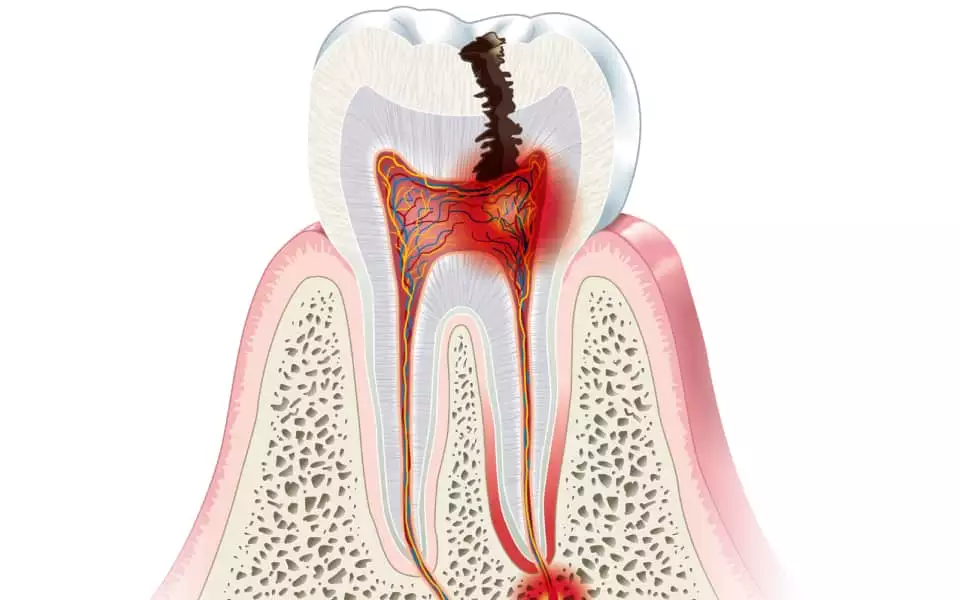
A dental abscess is a painful collection of pus caused by a bacterial infection. It can develop quickly and, if left untreated, can spread to surrounding tissues and become a serious health risk. The good news is that if you get it seen to early, it can almost always be treated successfully.
What is a dental abscess?
A dental abscess forms when bacteria infect the pulp (the soft inner part of the tooth), the surrounding gum, or the bone around the root. There are two main types. A periapical abscess forms at the tip of the tooth root, usually as a result of untreated decay or a damaged pulp. A periodontal abscess forms in the gum alongside the tooth, typically linked to gum disease.
Causes
The most common cause of a dental abscess is untreated tooth decay. When decay reaches the pulp of the tooth, bacteria can invade the soft tissue and trigger an infection. Other causes include:
- A cracked or chipped tooth that allows bacteria to reach the inner layers
- Gum disease, which creates pockets where bacteria can accumulate
- A failed dental procedure, such as a root canal that didn’t fully clear the infection
- Physical trauma to the tooth
- A weakened immune system
Symptoms
A dental abscess tends to make itself known fairly quickly. Symptoms include:
- Severe, throbbing toothache that may radiate to the jaw, ear, or neck
- Sensitivity to hot and cold foods and drinks
- Pain when biting or chewing
- Swelling of the face, cheek, or jaw
- Swollen, tender lymph nodes in the neck or under the jaw
- Fever
- A bad taste in the mouth, or bad breath, if the abscess drains
- A swollen, red bump on the gum near the affected tooth
If the abscess ruptures, you may notice a sudden rush of foul-tasting, salty fluid in your mouth. This can temporarily reduce the pain, but it doesn’t mean the infection has resolved. You still need to see a dentist.
When is it an emergency?
A dental abscess should always be treated promptly. If you develop difficulty swallowing or breathing, significant facial swelling, or a high fever, seek emergency care immediately. These can be signs that the infection is spreading beyond the mouth, which is a medical emergency.
Treatment
Treatment for a dental abscess depends on the location and severity of the infection. Options include:
- Drainage — the dentist makes a small incision to drain the pus, which provides immediate pain relief.
- Root canal treatment — if the abscess is caused by a pulp infection, a root canal may be able to save the tooth by removing the infected tissue and sealing the canal.
- Tooth extraction — if the tooth can’t be saved, it will need to be removed.
- Antibiotics — these may be prescribed to help control the spread of infection, but they don’t replace the need for dental treatment.
Pain relief, such as ibuprofen or paracetamol, can help manage discomfort while you wait for your appointment. Rinsing with warm, salty water may also provide some relief.
Prevention
The best way to avoid a dental abscess is to keep your teeth and gums healthy. Brush twice a day, floss daily, cut down on sugary foods and drinks, and go for regular dental check-ups. If you have a cracked or damaged tooth, or any dental pain that won’t go away, don’t put off getting it seen to. Catching decay and gum disease early is always the better option.