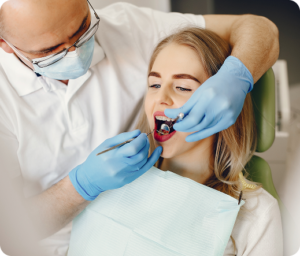
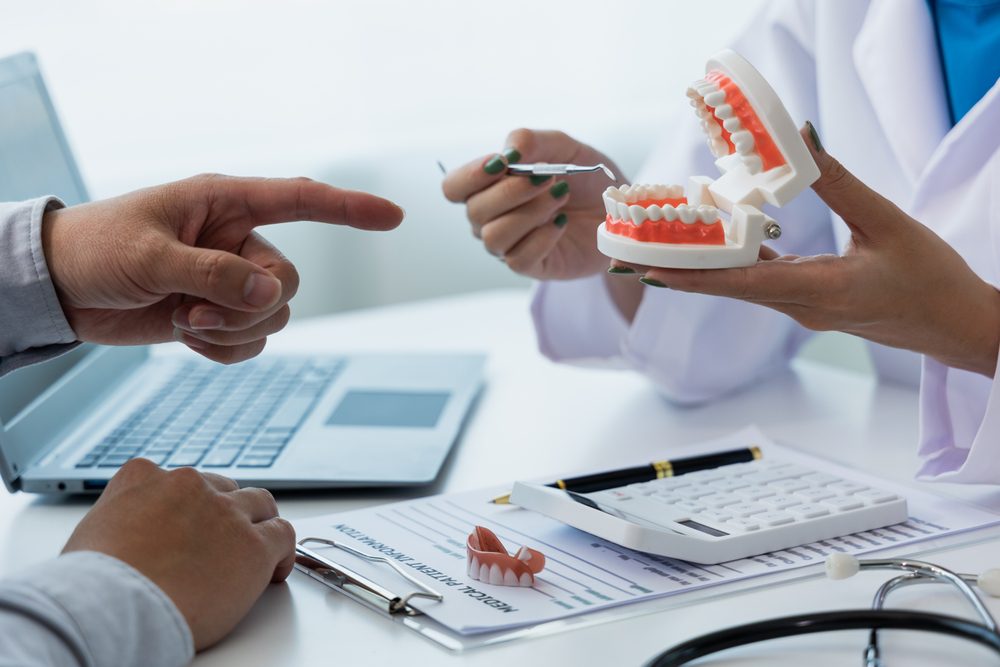
Teeth play a direct role in speech and chewing, which means they affect digestion too. Gaps in your smile can gradually lead to problems like overloading of the jaw joint and bone loss. In those situations, prosthetic treatment becomes the practical way forward. It’s considered when natural teeth are lost due to decay, gum disease, trauma, or other causes, and when the remaining teeth can no longer function properly on their own.
What Is Prosthetic Dental Treatment?
Prosthetic dentistry covers all the treatments used to replace missing teeth or restore teeth that have been badly damaged. The main options are dentures, bridges, and implant-supported restorations.
The right choice depends on how many teeth are missing, your bone health, your general health, and what you’re hoping to achieve.
When Should You Consider Prosthetic Treatment?
You might be a candidate for prosthetic treatment if:
- You’ve lost one or more teeth — gaps allow neighbouring teeth to shift position, which affects your bite and can lead to further problems.
- Your remaining teeth are heavily worn or damaged — crowns or other restorations may be needed to protect what’s left.
- You’re experiencing jaw pain or difficulty chewing — this can be a sign that missing teeth are placing extra strain on the jaw joint.
- You feel self-conscious about your smile — prosthetic treatment can restore both function and appearance.
Dentures
Dentures are removable prosthetics that replace some or all of the teeth in one or both arches. They’re custom-made to fit your mouth and are available in partial or full versions.
Modern dentures are more comfortable and natural-looking than older versions. They can also be stabilised using dental implants, which makes them far more secure and easier to eat with.
Dental Bridges
A bridge fills a gap by attaching an artificial tooth to the natural teeth on either side. The neighbouring teeth are prepared to receive crowns, and the bridge is fixed permanently in place.
Bridges are a good option when the teeth on either side of the gap are healthy and strong enough to support the bridge.
Implant-Supported Restorations
Implants are the most long-lasting solution for replacing missing teeth. A titanium post is placed in the jawbone and a crown, bridge, or denture is attached on top. Because the implant fuses with the bone, it also prevents the bone loss that occurs when a tooth root is missing.
Implants can be used to replace a single tooth, multiple teeth, or a full arch.
How Soon Should You Act?
The sooner a missing tooth is replaced, the better. Bone loss begins within months of losing a tooth, and neighbouring teeth start drifting into the gap relatively quickly. Early treatment means more options and simpler procedures.
If you’re not sure what you need, a consultation is the best starting point. We’ll assess your situation and explain the options clearly.
Summary
Prosthetic treatment isn’t just about appearance — it’s about function, comfort, and long-term oral health. If you’ve lost teeth or have been living with damaged teeth for a while, it’s worth getting a professional assessment sooner rather than later.