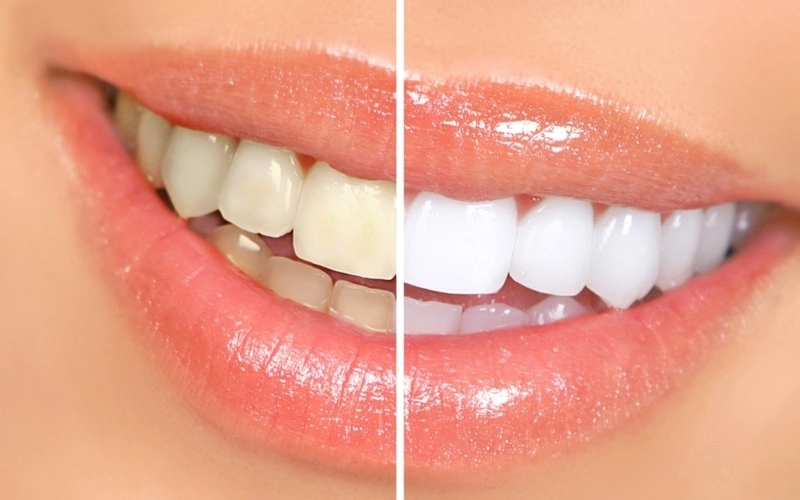
Most people dream of a bright, white smile. But plenty of us are put off professional teeth whitening by widely circulated claims that turn out not to be quite true. In this article, we’re going to look at some of the most common myths and explain why you shouldn’t let them hold you back.
Does whitening damage your teeth?
One of the most persistent myths is that whitening damages enamel and causes lasting sensitivity. It’s true that many patients notice some sensitivity to hot, cold, or sweet foods and drinks after whitening, but this typically resolves within 24 hours. There’s no permanent damage to the enamel. The temporary sensitivity is caused by dehydration of the tooth, specifically the glycerol in whitening gels drawing water out of the tooth tissue. Once the tooth rehydrates, the sensitivity goes away.
Does whitening make teeth look unnaturally white?
A common worry is that professionally whitened teeth will look fake or blindingly white. In reality, the dentist works with you to choose a shade that suits your natural complexion and personal preference. The goal is a healthier, brighter smile, not a costume-department effect. Professional treatment gives far more control over the final result than over-the-counter products, which can sometimes be less predictable.
Is whitening only for people with very stained teeth?
Not at all. Many people who opt for whitening simply want to refresh the natural colour of their teeth. Teeth naturally darken with age, and certain foods, drinks, and habits, such as coffee, tea, red wine, and smoking, can cause staining that regular brushing can’t fully shift. Whitening is a straightforward way to turn back the clock a little.
Over-the-counter products are just as good
This one is popular, but inaccurate. Professional whitening treatments use higher concentrations of active whitening agent, typically hydrogen peroxide or carbamide peroxide, than anything available over the counter. They’re applied in a controlled way, with custom-fitted trays and professional supervision. Over-the-counter kits can produce some results, but they’re generally less effective and the risk of uneven whitening or gum irritation is higher.
Whitening works on all types of discolouration
This is partly true but worth clarifying. Whitening gels work on staining caused by external factors, such as food, drink, and tobacco. They’re less effective on internal staining, which can be caused by certain antibiotics (particularly tetracycline taken during childhood), fluorosis, or natural ageing of the tooth from the inside. If your teeth are discoloured due to internal factors, your dentist may discuss other options such as veneers.
Whitening results last forever
Professional whitening produces results that can last anywhere from several months to a couple of years, depending on your diet and habits. Consuming lots of coffee, tea, red wine, or smoking will shorten the results. Good oral hygiene and occasional top-up treatments help maintain the brightness for longer.
Who shouldn’t have whitening?
Whitening isn’t suitable for everyone. Children and teenagers whose teeth are still developing shouldn’t have whitening treatment. It’s also not recommended during pregnancy. People with very sensitive teeth, significant decay, or gum disease should have those issues addressed before considering whitening. Crowns, veneers, and white fillings don’t respond to whitening gel, so any existing restorations won’t change colour, which can be a factor to consider.
If you’re thinking about teeth whitening, the best starting point is a consultation with your dentist. They can assess your teeth, identify any issues that need addressing first, and guide you towards the best option for your situation.