The latest figures suggest that periodontitis affects around 10% of the world’s population. Some estimates even suggest that up to half of all adults have some form of gum disease. It’s one of the leading causes of tooth loss in adults and has been linked to a range of other health conditions. So how do you spot it, and what can be done about it?
What is periodontitis?
Periodontitis, sometimes called gum disease or pyorrhoea, is a serious infection of the structures that support the teeth. This includes the gums, the periodontal ligament, and the bone that surrounds the roots. It starts with gingivitis, which is a milder form of gum inflammation, and progresses when left untreated. Unlike gingivitis, which only affects the gums and is reversible, periodontitis involves irreversible damage to the bone and connective tissue that hold teeth in place.
Signs and symptoms
The early stages of gum disease are often painless, which is why many people don’t realise they have it until significant damage has already occurred. Warning signs to watch for include:
- Gums that bleed when you brush or floss
- Red, swollen, or tender gums
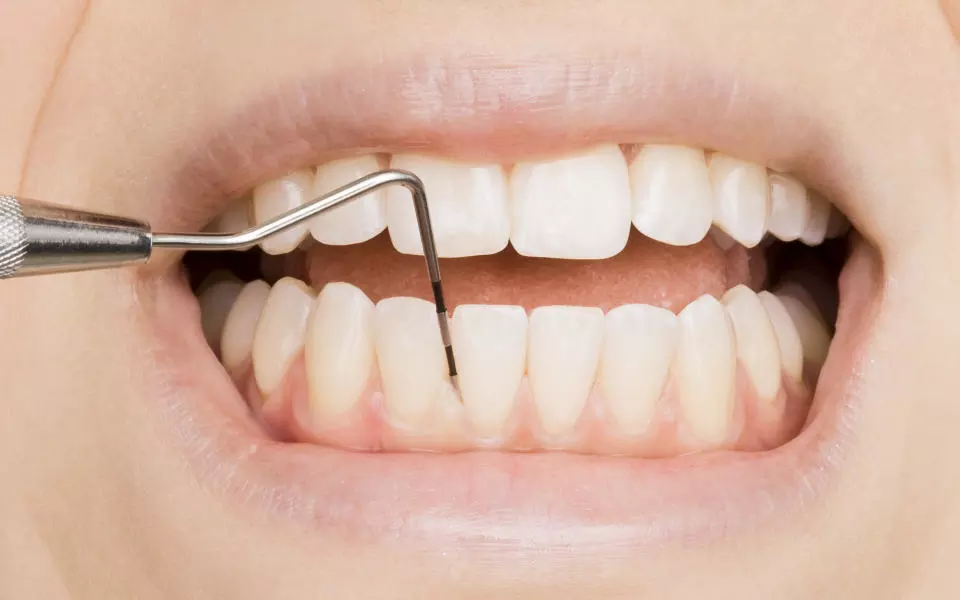
- Gums that have pulled away from the teeth, making the teeth look longer
- Persistent bad breath that doesn’t go away with brushing
- Pus between the teeth and gums
- Teeth that feel loose or have shifted position
- Pain when chewing
- Sensitivity to hot and cold
Any of these symptoms are a reason to book a dental appointment. The earlier periodontitis is caught, the better the outcome.
What causes periodontitis?
Periodontitis starts with the build-up of dental plaque, the sticky film of bacteria that forms on teeth. When plaque isn’t removed by brushing and flossing, it hardens into tartar (also called calculus). Tartar can only be removed by a dentist or hygienist. As bacteria accumulate below the gumline, they trigger an inflammatory response that, over time, destroys the gum tissue and bone.
Several factors increase the risk of developing periodontitis. Smoking is one of the biggest. Others include poorly controlled diabetes, hormonal changes during pregnancy, certain medications, a family history of gum disease, and stress.
Treatment options
The goal of periodontitis treatment is to control the infection, stop the destruction of bone and tissue, and where possible, help the gums reattach to the teeth. Treatment depends on how advanced the disease is.
In the early stages, professional cleaning is the main approach. This includes a deep clean known as scaling and root planing, sometimes called a “deep clean” or “gum treatment.” The dentist or hygienist removes tartar and bacterial deposits from above and below the gumline and smooths the root surfaces to make it harder for bacteria to reattach.
For more advanced cases, additional treatments may be needed. These can include antibiotic therapy to target persistent bacterial infection, surgical procedures to reduce the depth of gum pockets, and in some cases, bone or gum grafting to rebuild damaged tissue.
Maintenance after treatment
Once periodontitis has been treated, ongoing maintenance is key. This means more frequent hygienist visits, usually every three to four months, combined with thorough home care. Gum disease can be managed very effectively, but it can’t be “cured” in the same way a cavity can be filled. Regular monitoring is part of living with the condition.
Gum disease is serious but treatable. The most important thing is not to ignore the signs. If your gums bleed when you brush, that’s not normal, and it’s always worth getting it checked.