Bite problems, or malocclusion, are something orthodontists deal with every single day. A large proportion of the population has some degree of malocclusion, and many people don’t even know it. But what causes it, what are the different types, and what can be done about it?
What is malocclusion?
Malocclusion refers to any misalignment of the teeth or jaw that affects how the upper and lower teeth fit together when you bite. In an ideal bite, the upper teeth sit slightly in front of the lower teeth, and the molars fit together like interlocking puzzle pieces. When this doesn’t happen, it’s called malocclusion. The term comes from the Latin for “bad bite.”
Causes
The causes of malocclusion are varied. Some are inherited, others develop over time. Common causes include:
- Genetics — jaw shape and size are largely inherited. If a parent has a narrow jaw or crowded teeth, their children are more likely to as well.
- Childhood habits — prolonged thumb sucking, dummy use beyond age two or three, and mouth breathing can all influence how the jaw and teeth develop.
- Early or late loss of baby teeth — losing baby teeth too early can allow adjacent teeth to drift into the space, affecting how permanent teeth come through. Keeping baby teeth for too long can have a similar effect.
- Dental injuries — trauma to the jaw or teeth can shift their position.
- Poorly fitted dental restorations — fillings, crowns, or bridges that are too high can alter the bite over time.
- Mouth breathing — breathing through the mouth consistently, often due to allergies or enlarged adenoids, can affect the development of the palate and jaw.
Types of malocclusion
Orthodontists classify bite problems using a system developed by Edward Angle in the early 20th century, based on the position of the first molars:
- Class I — the molar relationship is correct, but there are other issues such as crowding, spacing, or individual teeth that are rotated or tilted.
- Class II — the lower jaw is positioned further back than it should be relative to the upper jaw. This is sometimes called an overbite or “buck teeth.”
- Class III — the lower jaw protrudes forward relative to the upper jaw. This is often called an underbite.
Beyond these main classes, other types of misalignment include crossbite (where upper teeth bite inside the lower teeth rather than outside them), open bite (where the upper and lower teeth don’t meet at the front when the mouth is closed), and crowding (where there isn’t enough space in the jaw for all the teeth).
Consequences of untreated malocclusion
Mild malocclusion may cause no problems at all. More significant misalignment, however, can lead to a range of issues:
- Difficulty chewing food properly, which can affect digestion
- Speech difficulties, including lisping
- Uneven wear on tooth enamel
- Increased difficulty cleaning the teeth properly, which raises the risk of decay and gum disease
- Jaw pain and temporomandibular joint (TMJ) problems
- Headaches related to muscle tension in the jaw
- Self-consciousness about the appearance of the smile
Treatment options
The right treatment depends on the type and severity of the malocclusion, and on the age of the patient. Options include:
- Fixed braces — metal or ceramic brackets bonded to the teeth with an archwire. Highly effective for most types of malocclusion.
- Clear aligners — a series of removable, transparent trays that gradually move the teeth. Popular with adults and teenagers for milder to moderate cases.
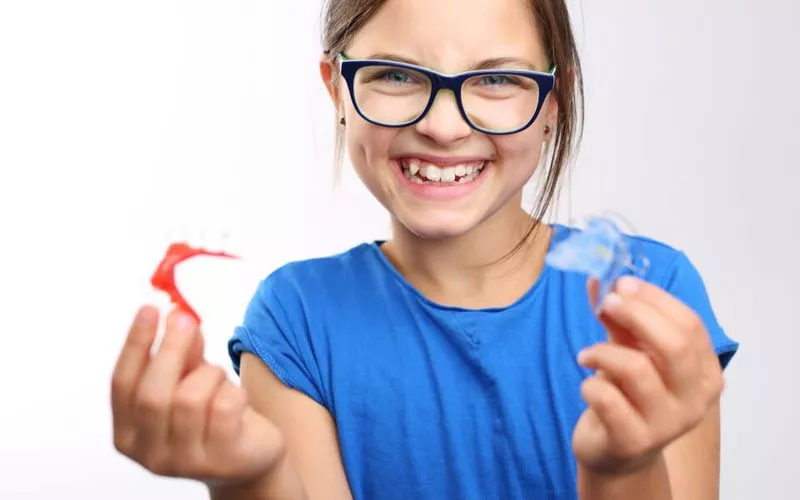
- Removable appliances — used mainly in children to guide jaw development.
- Functional appliances — devices that work with the jaw muscles to correct Class II or III problems, particularly effective during the growth years.
- Jaw surgery (orthognathic surgery) — for severe skeletal discrepancies in adults that can’t be corrected with braces alone.
- Tooth extraction — sometimes needed to create enough space in a crowded jaw before orthodontic treatment begins.
Orthodontic treatment at any age can make a real difference, not just to the appearance of your smile but to your long-term oral health. If you think you or your child might have a bite problem, a consultation with an orthodontist is a good starting point.