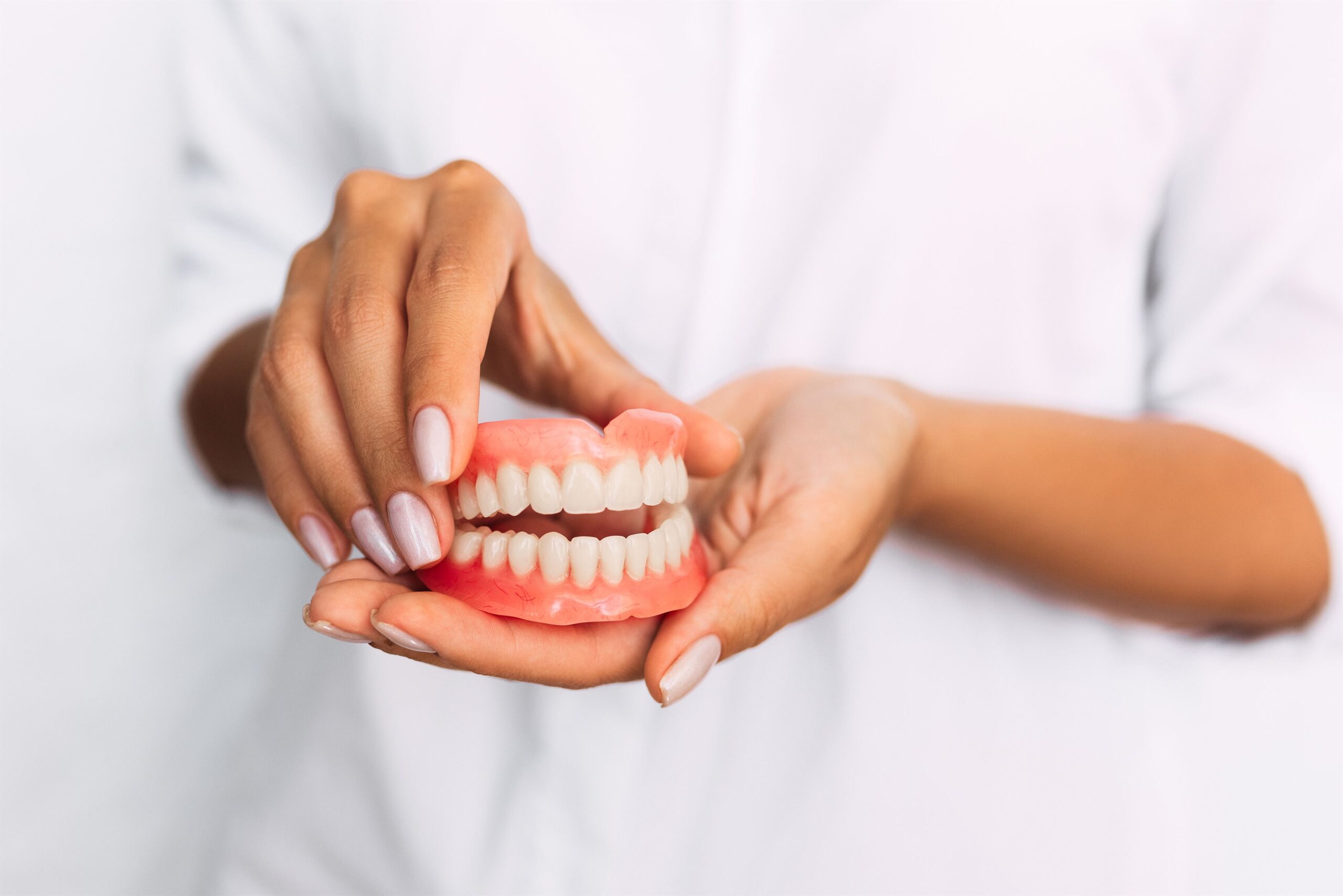
Dental prosthetics is the branch of medicine focused on restoring lost function and the appearance of your teeth. One of its main goals is to bring back comfort when eating and speaking, and to restore the symmetry of your face. Missing teeth cause more than just aesthetic problems — they can lead to digestive issues, speech difficulties and even changes in the structure of the jaw bone. In this article we look at the types of dental prostheses, when to consider them and what they cost. Read on!
Dental prosthetics — why is it worth it?
Missing teeth affect not just your appearance, but also your whole body’s health. Dental problems can make eating difficult, which leads to poor digestion and nutritional deficiencies.
Discomfort when speaking is another challenge for people with incomplete dentition. Teeth play a key role in articulating sounds, and their absence can cause self-consciousness and withdrawal from social life. Missing teeth also affect the mobility of remaining teeth, which can lead to further tooth loss or bite problems.
Protecting the integrity of the oral cavity is another reason why prostheses are so important. Teeth support the structure of your face, and without them the soft tissues — lips and cheeks — can deform.
The psychological side matters too. A full smile often has a direct impact on self-esteem and overall sense of wellbeing. Many patients describe the moment they got their prosthesis as a turning point — when they rediscovered their confidence and joy in life.
Types of dental prostheses
Dental prosthetics offers a range of solutions designed to restore chewing function and smile aesthetics. The main categories are fixed and removable prostheses, each with its own unique characteristics and uses.
Fixed prostheses
These are permanently attached inside the patient’s mouth. They cannot be removed independently, which guarantees their stability and wearing comfort. The most common types of fixed prostheses include:
- Dental crowns — these restore teeth that have been damaged but whose roots are still strong and healthy. They bring back the tooth’s shape, size and basic function.
- Dental bridges — used to replace missing teeth. They consist of one or more artificial teeth permanently fixed to neighbouring teeth or implants, forming a stable structure.
Removable prostheses
These are designed so that patients can put them in and take them out themselves. Although they may initially be less comfortable than fixed prostheses, they make cleaning and maintenance easier. The main types include:
- Full dentures — replace all teeth in the upper or lower jaw. They are often made from acrylic and rest on the patient’s gums.
- Partial dentures — for patients missing some, but not all, teeth. They can be made from various materials, including acrylic and metal.
The right choice of prosthesis depends on your individual needs and expectations, as well as the condition of your teeth. The decision is made after a consultation with a dentist who specialises in prosthetics and who will carefully assess the state of your mouth and the available treatment options. Modern prosthetics gives patients a wide range of possibilities, helping them enjoy a healthy and beautiful smile for many years.
Dental prosthetics — prices
At Perfect Smile, the price of dental prostheses ranges from £100 to £1,200. Patients can choose from a temporary crown made in the surgery or in a laboratory, porcelain crowns on a metal or acrylic base, partial dentures, full dentures and a skeleton prosthesis — the most expensive option at £1,200. Perfect Smile also offers repair services, such as removing an old prosthetic crown, relining a denture or adding a tooth or clasp to a denture. We also make relaxation splints for patients who suffer from bruxism.
Summary
Dental prostheses help many people regain not just full chewing function, but also a complete smile — and with it, their confidence. The right prosthesis usually depends on individual preferences and budget. At Perfect Smile, patients can choose from both fixed and partial options, ranging in price from £100 to £1,200.