Losing teeth, whether through natural causes or injury, can have a real impact on your quality of life and your confidence. On top of that, gaps in your smile affect your health over time, contributing to bone loss in the jaw. Thankfully, modern dentistry offers several effective options for replacing missing teeth. Here’s a guide to help you understand each one.
Why Replacing Missing Teeth Matters
When a tooth is lost, the bone that supported it begins to shrink. Neighbouring teeth can drift into the gap, affecting your bite. Replacing missing teeth as soon as possible protects both your oral health and your appearance.
The right prosthetic option depends on how many teeth are missing, your jawbone health, your general health, and your personal preferences.
Removable Partial Dentures
A partial denture replaces one or more missing teeth and can be taken out for cleaning. It rests on the gums and is held in place by clasps that attach to remaining natural teeth.
Partial dentures are one of the more affordable solutions, and they work well in many cases. They do require some getting used to, and some patients find them less comfortable than fixed options.
Full Dentures
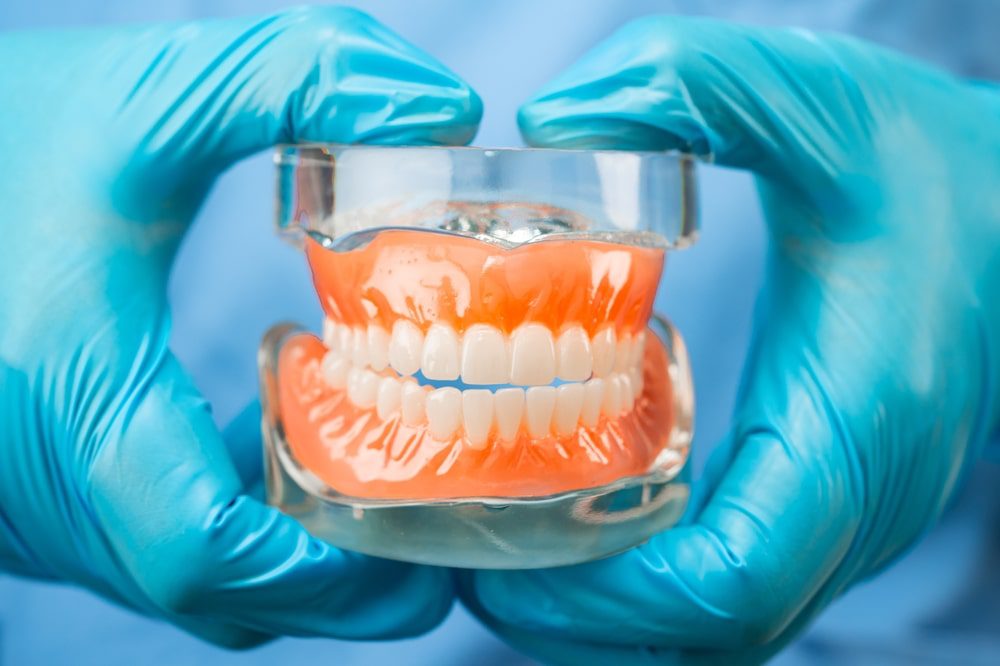
Full dentures are used when all teeth in one or both arches are missing. Modern complete dentures are custom-made to fit your mouth precisely, improving both comfort and appearance compared to older designs.
They can be further stabilised using dental implants — a popular combination that gives patients the security of a fixed prosthetic with the flexibility of a removable one.
Dental Bridges
A bridge fills a gap by anchoring an artificial tooth (or teeth) to the natural teeth on either side. The supporting teeth are prepared by removing some enamel so that crowns can be placed over them to hold the bridge in position.
Bridges are a fixed solution — they stay in your mouth permanently — and they look and function much like natural teeth. The main consideration is that the neighbouring teeth need to be altered.
Dental Implants
Implants are widely considered the gold standard for replacing missing teeth. A titanium post is placed into the jawbone and a crown is attached on top, creating a restoration that looks, feels, and functions just like a real tooth.
Because the implant integrates with the bone, it also helps prevent bone loss — something bridges and dentures can’t do. Implants are a long-term investment, often lasting many years with good care.
How to Choose the Right Option
Choosing the right prosthetic depends on several things:
- Number of missing teeth — a single missing tooth may be best replaced by an implant or bridge, while multiple gaps may point towards a denture or implant-supported bridge.
- Jawbone health — good bone density is needed for implants. If bone loss has occurred, grafting may be an option.
- Budget — dentures tend to be the most affordable option upfront, while implants cost more initially but may be more cost-effective long term.
- General health — some conditions affect whether implant surgery is suitable.
Summary
There’s no single best option for everyone — the right choice depends on your individual situation. Book a consultation with our team and we’ll help you find the solution that fits your needs, your health, and your budget.