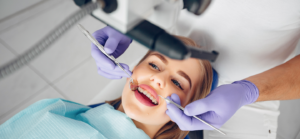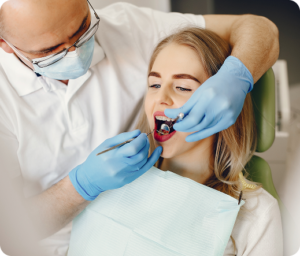
Keeping on top of your oral health and having regular check-ups means you can keep your smile looking good and avoid more complex treatment down the line. Regular appointments with your dentist allow problems like decay to be caught early, and they help keep your teeth in good condition for the long term.
How Often Should You See Your Dentist?
Most adults should have a dental check-up at least once a year, and ideally every six months. Your dentist may recommend more frequent visits if you have a higher risk of decay, gum disease, or other oral health issues.
At a check-up, the dentist examines your teeth, gums, and soft tissues, and may take X-rays to check for problems that aren’t visible to the naked eye.
Dental X-Rays
X-rays reveal what’s happening between the teeth and below the gum line — areas that a visual examination alone can’t reach. They help detect decay in its early stages, check the health of the bone supporting your teeth, and identify other issues before they develop into something more serious.
Routine dental X-rays use very low doses of radiation and are considered safe for most patients.
Scale and Polish (Professional Cleaning)
Even with thorough daily brushing and flossing, some plaque hardens into tartar (calculus) that can only be removed by a dental professional. A scale and polish removes this build-up from the tooth surfaces and below the gum line, reducing the risk of gum disease.
It also removes surface staining, leaving your teeth looking cleaner and brighter. Most patients have a scale and polish every six months alongside their check-up.
Fluoride Treatments
Fluoride strengthens tooth enamel and makes it more resistant to acid attacks from bacteria. Professional fluoride applications in the clinic use stronger concentrations than toothpaste, and they’re particularly beneficial for patients at higher risk of decay.
Fluoride varnish is quick to apply and very well tolerated by patients of all ages.
Fissure Sealants
Fissure sealants are thin protective coatings applied to the biting surfaces of the back teeth, where the natural grooves (fissures) can trap food and bacteria. They’re most commonly recommended for children and teenagers, but adults with deep fissures can also benefit.
The treatment is straightforward and completely painless — no drilling involved.
Gum Health Assessments
Gum disease is one of the most common dental conditions, and in its early stages it often causes no obvious symptoms. A gum health assessment at your check-up allows the dentist or hygienist to measure the health of the gum tissue and identify any areas of concern early.
Caught early, gum disease can be managed effectively with professional cleaning and improved home care.
Summary
Prevention is always easier and more affordable than treatment. Regular check-ups, professional cleaning, and preventive treatments like fluoride and sealants are some of the most worthwhile things you can do for your oral health. Book your appointment and stay ahead of problems before they start.