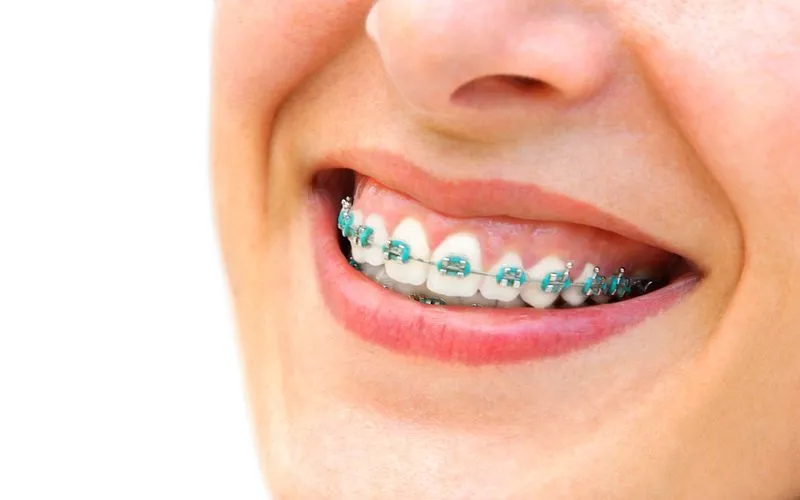
Why is it worth straightening crooked teeth? What orthodontic treatment options are available? Which is best? How does orthodontic treatment work? What are the pros and cons of each method?
Crooked teeth are not just about appearance – more importantly, bite problems can also cause a variety of oral health issues.
From a health perspective, a misaligned bite can lead to difficulties with biting and chewing, speech problems, damage to the inner lining of the mouth and cheeks, and an increased likelihood of tooth decay and gum disease. Orthodontic treatment can therefore improve not only your appearance but also your overall oral health.
Let’s not forget the aesthetic side, either.
Straightening your teeth will have a significant impact on how you look, and in turn on how you feel. Crooked teeth can knock your confidence and cause embarrassment. Correcting the bite can improve your self-esteem and how you carry yourself. Straight teeth will also likely improve facial symmetry – and since people naturally prefer more symmetrical faces, this simply helps you look your best.
If you are thinking about orthodontic treatment, it is important to talk to your dentist or orthodontist to find out which treatment will be right for you.
The main methods of teeth straightening are covered below. We begin, however, with the question of the best age to start orthodontic treatment.
Traditional metal braces
Traditional metal braces are still a commonly used and very effective method of straightening teeth. These braces consist of metal brackets and an archwire, fixed to the front surfaces of the teeth using ligatures. The wire is periodically tightened by the orthodontist, gradually moving the teeth into the correct position.
Traditional metal braces have certain advantages over other types of orthodontic treatment.
One of the main advantages of traditional metal braces is that they are generally more durable. They are also less expensive than other orthodontic options.
Another advantage is that traditional metal braces can be used to correct a very wide range of problems, including crowded teeth, gaps, overbites, underbites, and more. They are also very versatile, suitable for children, teenagers, and adults.
The biggest drawback of traditional metal braces is that they are very noticeable, which can cause embarrassment and dent confidence. Some changes to diet and oral hygiene routines will also be needed. Regular flossing and rinsing become necessary, and hard, sticky, or sweet foods need to be avoided as they can damage the braces.
Cosmetic (clear) braces
Clear braces use tooth-coloured or transparent brackets made from composite, ceramic, or crystal materials. They work in much the same way as traditional metal braces.
Like traditional braces, ceramic braces use brackets and a wire to exert pressure on the teeth, slowly moving them into the desired position.
For people who don’t want to draw attention to the fact that they are wearing braces, clear brackets are a more appealing option.
Clear braces are less durable than metal bracket braces, so they may need more careful handling and maintenance to avoid damage. Clear braces are also usually more expensive than traditional metal ones.
Invisalign aligners
Invisalign is an increasingly popular alternative to traditional braces for straightening teeth – and for good reason.
Instead of using semi-permanently fixed metal or ceramic components, the Invisalign system uses clear, custom-made aligners to gradually and reliably move teeth into the correct position. These aligners are made from clear plastic that is virtually invisible when worn. This makes Invisalign a more discreet option for people who feel self-conscious about wearing visible braces.
The benefits of Invisalign go beyond aesthetics, though. A major practical advantage is that the aligners are removable, making eating, brushing, and flossing easier and more comfortable than with traditional braces.
The aligners must be worn for at least 20 to 22 hours a day to work properly, however. This method therefore requires commitment and consistency.
The advantages of Invisalign come at a higher cost, but many patients feel the benefits are well worth the extra investment.
It is important to remember that Invisalign will not be suitable for all patients. A consultation with an orthodontist is needed to determine whether Invisalign is an option.
Once Invisalign treatment begins, regular orthodontic visits are needed to monitor progress.
Overall, Invisalign is a popular and effective teeth-straightening method, and one that a growing number of patients and orthodontists choose for its considerable advantages. Even so, it is still important to carefully consider all treatment options and discuss them with your dentist before making a decision.
Lingual braces
Lingual braces are metal braces fitted to the inner (tongue-side) surface of the teeth. This means that the elements visible with traditional braces are completely hidden – even when the person wearing them speaks or smiles.
This “invisibility” can be the main draw for people who are concerned about the appearance of traditional braces and who want a more discreet treatment option.
On the downside, lingual braces can be harder to adjust and clean than traditional braces, because they are less accessible due to their position. They can also be less comfortable, since the tongue comes into contact with the metal components.
Lingual braces are generally more expensive than both traditional metal braces and Invisalign.